For decades, “prefab” sounded like an emergency fix or a construction-site cabin. That’s changing fast, and not because of fashion: two recent stories confirm it with hard numbers, one from the world’s largest housing market and one less than 300 kilometers from our offices.
Category: News
-

-
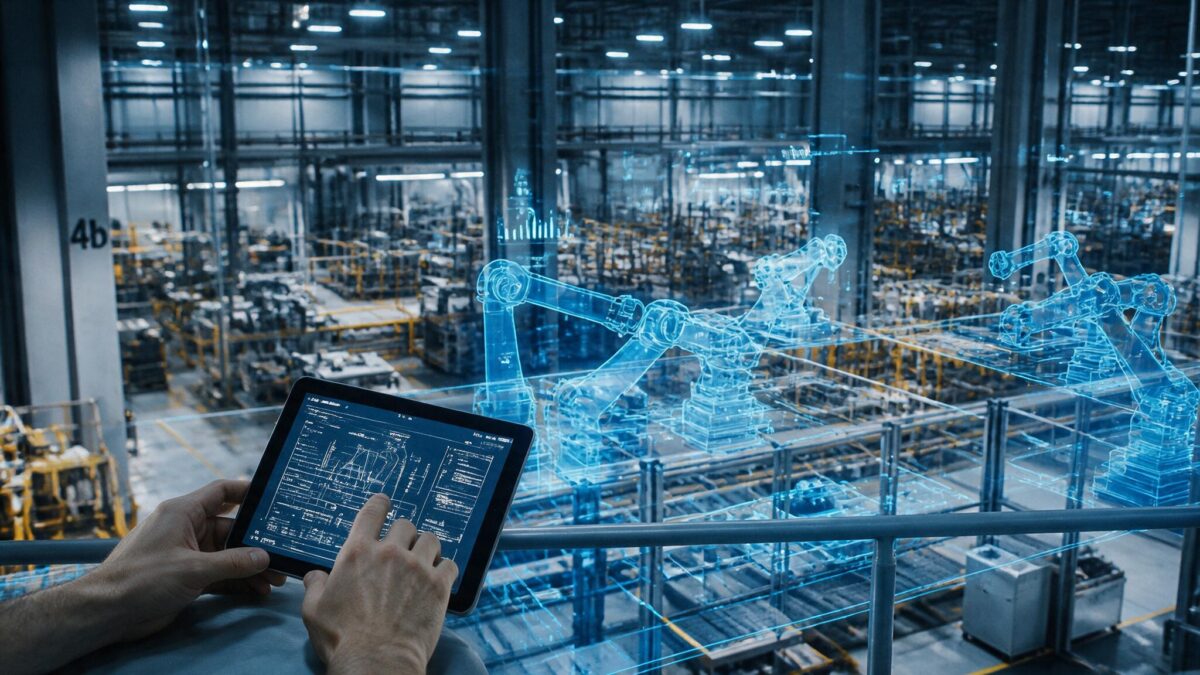
A number surfaced this week that sums up where industry is heading better than any report could: DFactory Barcelona, the largest Industry 4.0 hub in southern Europe, is tripling its footprint, growing from 17,000 to 60,000 m² before the end of the year, backed by a €50 million investment. The site currently operates at full occupancy with 44 companies installed, and the expansion is expected to generate 1,500 direct jobs and 5,000 indirect ones. In Catalonia, Industry 4.0-specialized companies now number 1,447 — triple the figure of four years ago — accounting for 2.6% of regional GDP.
-

We talk a lot about algorithms, but artificial intelligence is, above all, an infrastructure problem. According to the International Energy Agency’s (IEA) latest report, electricity demand from data centres surged 17% in 2025, while demand from AI-focused data centres specifically grew by 50% over the same period. The projection for 2030 is even more striking: from 485 TWh to 950 TWh globally, nearly doubling in five years. Just five major tech companies invested over $400 billion in 2025 alone — a figure that already exceeds global investment in oil and gas production.
This isn’t a minor detail for the industrial sector: it means AI has effectively become a first-tier industrial consumer, with the same grid, power, and planning demands as a steel mill or a chemical plant.
-

The International Energy Agency just published a figure worth reading twice: by 2030, data centres will account for roughly 3% of global electricity consumption — as much as all of Japan combined. To sustain that growth, the world will mobilise close to two trillion dollars in digital infrastructure before the decade is out. In 2026 alone, Big Tech’s spending on this race could reach $700 billion, up from $400 billion in 2025.
This isn’t an abstract, far-off statistic. Spain has become one of the epicentres of this boom: the country has attracted over €34 billion in data centre investment in just six months, with a project pipeline nearing €90 billion. Every new facility announced raises the same underlying question — the one that actually matters to us as engineers: where will all that energy come from, and how do we manage it without the planet footing the bill?
-

KPMG has just published its Global Tech Report 2026 on industrial manufacturing, based on responses from 258 technology leaders across 22 countries. The headline is encouraging: 68% of manufacturers already deploy AI somewhere in their operations, and 49% report concrete financial benefits from those investments. The old narrative of AI stuck in isolated pilots is finally fading.
But the report itself points to the catch. 83% of executives believe they’re building a solid data foundation to support AI. Yet 76% still cite unreliable data as one of the top risks to their AI implementation. That gap between confidence and actual capability is arguably the most important number in the whole study.
-

This week the International Energy Agency (IEA) put a number on the table worth pausing over: by 2030, the data centres powering artificial intelligence will consume as much electricity as an entire country — Japan. Sustaining that growth will require close to two trillion dollars in investment before the decade is out.
At the same time, another report released this same week — Deloitte’s Smart Manufacturing and Operations Survey 2025 — shows that industrial plants already using AI, automation and data analytics are seeing production gains of 10% to 20% and productivity gains of up to 20%. The same technology driving up global electricity demand is the one making factories more efficient. That’s the paradox — and the opportunity.
-
A phrase keeps coming up these days in reports from Deloitte, KPMG and the World Economic Forum: smart manufacturing is no longer a future promise. On July 24, several economic outlets highlighted a figure that sums up the moment: 92% of manufacturers now see plant-level AI as their main driver of competitiveness over the next three years. This isn’t about isolated pilots anymore — it’s a transformation reaching the operational core of industry, and energy is one of the first areas where it shows.
-

From the physical plant to its virtual twin
DIENERTEX has developed digital twin prototypes for energy-intensive processes — fiber-shredding and recycling lines, spinning, finishing and laminating — capable of accurately reproducing a plant’s real energy and production behavior. The key isn’t just the technology, it’s how it’s used: these models let teams simulate production, maintenance or investment decisions before touching a single machine, avoiding costly trials and unnecessary downtime.
ITE’s technical team puts it well: the models “reproduce energy-production behavior with an adequate degree of accuracy,” translating into better-informed, data-driven decisions. That’s not a small detail. With energy costs remaining one of the biggest pressures on industrial margins, being able to anticipate the impact of a decision before executing it changes the game.
A pattern repeating at global scale
What’s telling is that DIENERTEX isn’t an isolated case — it’s the local confirmation of a trend already showing up in major sector reports. Cisco’s State of Industrial AI Report 2026, based on more than 1,000 operational technology leaders across 19 countries, found that 61% of industrial organizations have already moved AI into live operations — not pilots — with energy optimization and sustainability ranking among the highest-traction use cases, alongside predictive maintenance and process automation. 83% of companies plan to increase their industrial AI investment, and 87% expect tangible results within the next two years.
Taken together, the local case and the global snapshot point in the same direction: industrial digitalization has stopped being a promise for the future and become a present-day management tool. And its raw material is always the same: well-structured energy, production and environmental data, able to feed both a diagnosis and a simulation.
Why this matters for industrial engineering
Beyond the immediate savings, DIENERTEX points to something with more runway: laying the groundwork for a sector-wide data environment that supports carbon footprint calculations, decarbonization plans, or the adoption of ecodesign criteria. In other words, the same data that cuts an energy bill today will be the documentation required by European sustainability regulation tomorrow. Whoever starts structuring that information now isn’t just saving money — they’re arriving prepared for what’s coming.
For those of us working every day at the intersection of engineering, industrial processes and sustainability, cases like this confirm a core conviction: there’s no energy transition without a data transition. The question every industrial company should be asking isn’t whether to digitalize, but how fast it can turn its operational data into decisions.
Does your organization have the data it needs to build its own digital twin, even at a small scale? We’d love to hear about your experience in the comments.
-
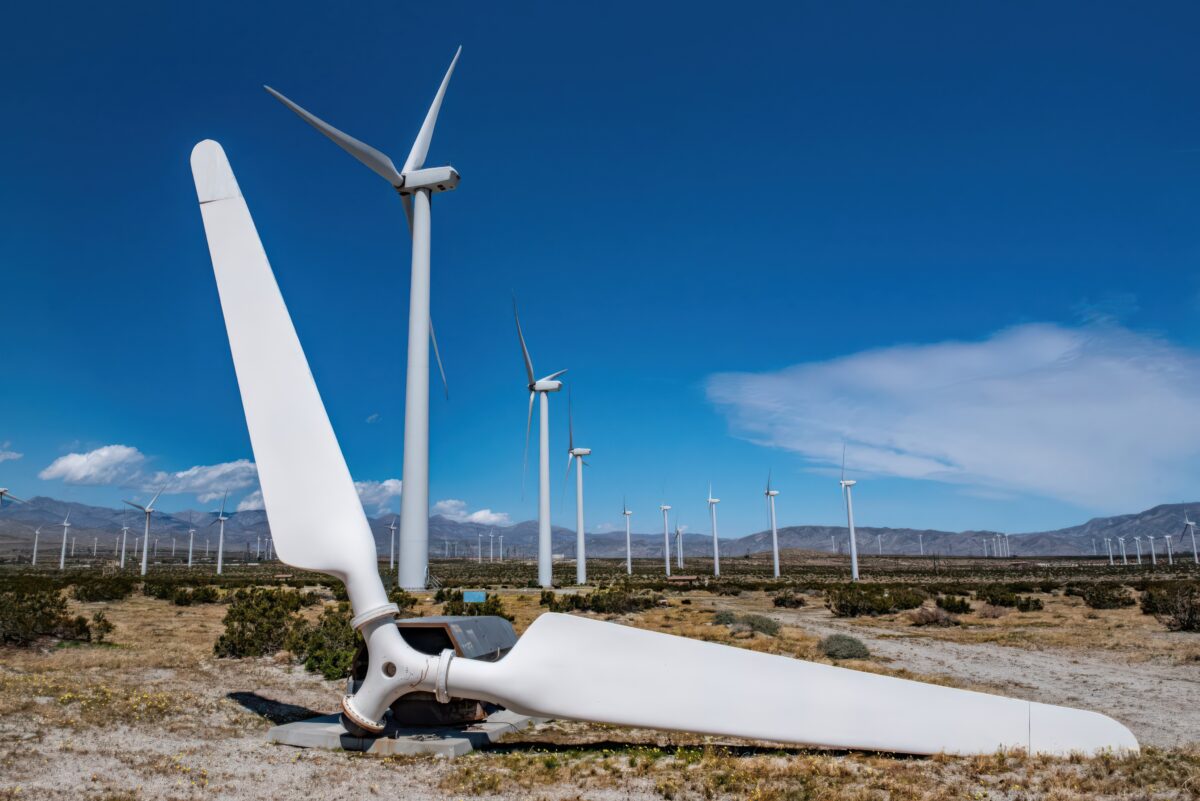
Upscaled with Gigapixel v8.4.4. 2048x1367 => 4096x2734 (2x) Model: Standard V2, denoise: 0.85, sharpen: 0.01, decompression: 0.83 Recycling a yogurt container is easy. But what about a wind turbine over 100 meters tall? That’s the challenge addressed by the CICLO Transmissions Project, an initiative aiming to recycle and recover 100% of wind turbine materials, driving circular economy practices in the renewable energy sector.
-
Upscaled with Gigapixel v8.4.4. 1304x977 => 2608x1954 (2x) Model: Standard V2, denoise: 0.85, sharpen: 0.01, decompression: 0.83 The transition toward a more sustainable energy model is no longer a future aspiration: Spain and Portugal are taking the lead. According to the Scaling up Cleantech panel at South Summit 2024, one in every five green hydrogen projects worldwide will be developed on the Iberian Peninsula, demonstrating the growing influence of both countries in the clean technology revolution.