Skip to the content
TALAT
  • Our Company
  • Services
    • Project Management
    • MEP Services
    • Engineering Design Services
  • Projects
  • Insights
  • Contact
    • Talent
  • EN
TALAT
  • Our Company
  • Services
    • Project Management
    • MEP Services
    • Engineering Design Services
  • Projects
  • Insights
  • Contact
    • Talent
Camí Vell de Bunyola, 37, Local 9, North
07009 Palma, Balearic Islands

+34 971 559031
info@talat.es
  • Legal Notice
  • Privacy Policy
  • Cookies
  • Ethics Channel
Whatsapp
Linkedin
Instagram
  • EN

Tag: Sustainability

  • A few weeks ago, Accumin — through its real estate data and intelligence division — published a study confirming something TALAT has argued from the site office for years: a building’s energy performance isn’t decided by its façade, it’s decided by its systems. Based on energy certificates registered with Spain’s Ministry for Ecological Transition, the study found that 94.2% of Spanish homes carry an inefficient rating (grades D to G), with 67.3% concentrated in grade E alone.

    Read also: EPBD for Hotels: From Compliance to Measurable Evidence

    • Tags BMS, building renovation, Energy Efficiency, Engineering, Hotels, real estate, Sustainability
  • This week marks the end of the two-month window the European Commission gave member states, Spain included, to complete transposition of Directive (EU) 2024/1275 on the Energy Performance of Buildings (EPBD), after opening infringement proceedings in July against all 27 countries for missing the original 29 May deadline. This is no routine paperwork: it is the clearest signal yet that Brussels intends to accelerate, with firm dates and penalties attached, the decarbonisation of Europe’s building stock ahead of 2050.

    Read also: EPBD for Hotels: From Compliance to Measurable Evidence

    • Tags building renovation, construction management, Energy Efficiency, EPBD, real estate, Sustainability, sustainable hotels
  • We talk a lot about algorithms, but artificial intelligence is, above all, an infrastructure problem. According to the International Energy Agency’s (IEA) latest report, electricity demand from data centres surged 17% in 2025, while demand from AI-focused data centres specifically grew by 50% over the same period. The projection for 2030 is even more striking: from 485 TWh to 950 TWh globally, nearly doubling in five years. Just five major tech companies invested over $400 billion in 2025 alone — a figure that already exceeds global investment in oil and gas production.

    This isn’t a minor detail for the industrial sector: it means AI has effectively become a first-tier industrial consumer, with the same grid, power, and planning demands as a steel mill or a chemical plant.

    Read also: The AI paradox: it consumes as much as Japan… and could save as much as Indonesia

    • Tags AI, Data, EnergyTransition, Industry 4.0, Innovation, Sustainability
  • The International Energy Agency just published a figure worth reading twice: by 2030, data centres will account for roughly 3% of global electricity consumption — as much as all of Japan combined. To sustain that growth, the world will mobilise close to two trillion dollars in digital infrastructure before the decade is out. In 2026 alone, Big Tech’s spending on this race could reach $700 billion, up from $400 billion in 2025.

    This isn’t an abstract, far-off statistic. Spain has become one of the epicentres of this boom: the country has attracted over €34 billion in data centre investment in just six months, with a project pipeline nearing €90 billion. Every new facility announced raises the same underlying question — the one that actually matters to us as engineers: where will all that energy come from, and how do we manage it without the planet footing the bill?

    • Tags AI, Data Centres, MEP Engineering, Sustainability
  • This week the International Energy Agency (IEA) put a number on the table worth pausing over: by 2030, the data centres powering artificial intelligence will consume as much electricity as an entire country — Japan. Sustaining that growth will require close to two trillion dollars in investment before the decade is out.

    And it is not an abstract figure. Spain has become one of the epicentres of this boom: the country has attracted over €34 billion in data centre investment in just six months, with a project pipeline nearing €90 billion, while Big Tech spending on this race could reach $700 billion in 2026 alone. Every new facility raises the question that really matters to us as engineers: where will all that energy come from, and how do we manage it without the planet footing the bill?

    At the same time, another report released this same week — Deloitte’s Smart Manufacturing and Operations Survey 2025 — shows that industrial plants already using AI, automation and data analytics are seeing production gains of 10% to 20% and productivity gains of up to 20%. The same technology driving up global electricity demand is the one making factories more efficient. That’s the paradox — and the opportunity.

    Keep reading:

    • The Industry Powering AI: Why the Next Great Engineering Project Is the Power Grid
    • Factories that listen to their own data: AI as a lever for energy savings
    • When AI Hits the Data Wall: The Lesson Industry Can’t Keep Postponing
    • Sustainable Data Centres: Built for Tomorrow?
    • Digital twins aren’t simulating the future anymore: they’re saving money today
    • Industry 4.0 stops being a pilot: what DFactory Barcelona’s expansion tells us
    • Tags AI, Data, Engineering, Industry 4.0, Sustainability
  • Upscaled with Gigapixel v8.4.4. 2048x1367 => 4096x2734 (2x) Model: Standard V2, denoise: 0.85, sharpen: 0.01, decompression: 0.83

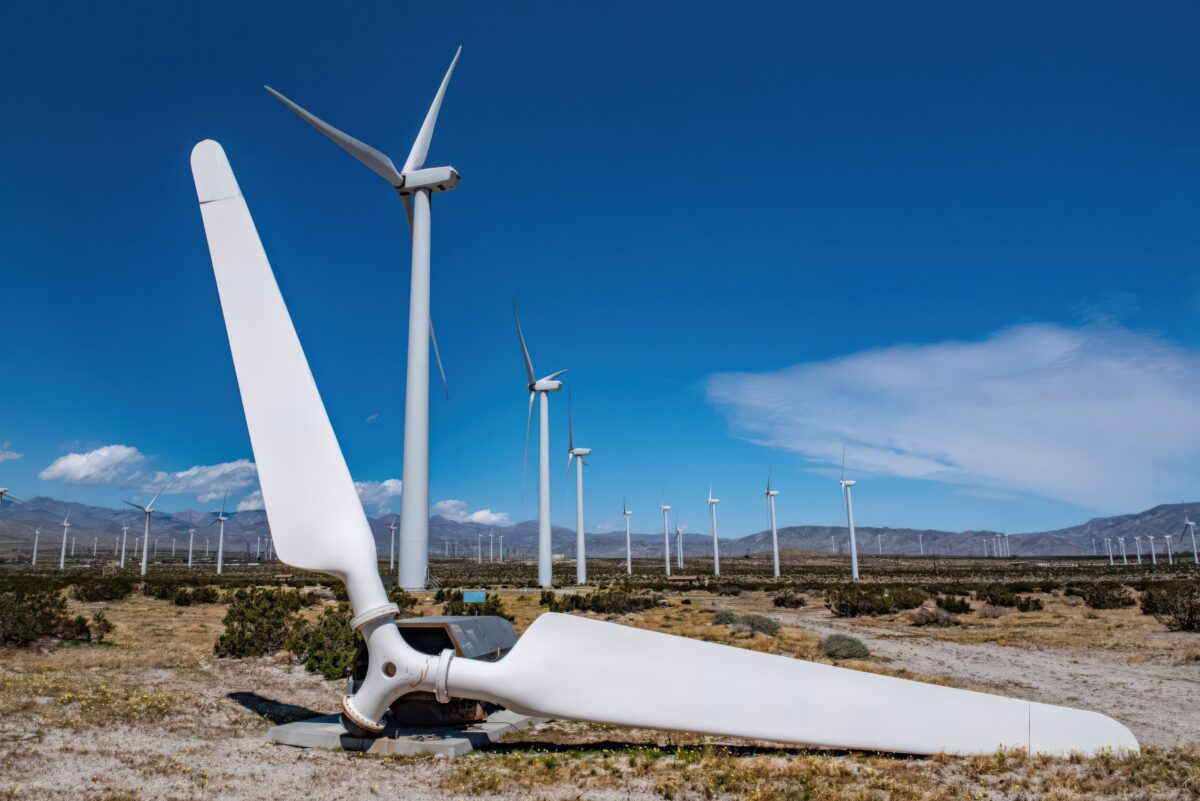
    Recycling a yogurt container is easy. But what about a wind turbine over 100 meters tall? That’s the challenge addressed by the CICLO Transmissions Project, an initiative aiming to recycle and recover 100% of wind turbine materials, driving circular economy practices in the renewable energy sector.

    • Tags Circular Economy, Recycling, Renewable Energy, Sustainability, Wind Turbine Blades, Wind Turbines
  • The demand for new data centre capacity is growing at an unprecedented pace, driven by the rise of artificial intelligence, cloud computing, and the ever-increasing need for real-time digital services. However, this rapid growth runs headlong

    Read also: The AI paradox: it consumes as much as Japan… and could save as much as Indonesia

    • Tags Carbon Emissions, Data Center Design, Data Centres, Digital Infrastructure, Energy Efficiency, Liquid Cooling, Sustainability
  • To mark the third anniversary of the REPowerEU Plan, the European Commission has published an assessment highlighting the key role of renewable energy in transforming the EU’s energy system.

    • Tags Energy Efficiency, Energy Transition, European Union, Renewable Energy, REPowerEU, Sustainability, Wind and Solar Power
TALAT
NextGen
Engineering Solutions
Camí Vell de Bunyola, 37, Local 9, North,
07009 Palma, Balearic Islands

+34 971 559031
info@talat.es
  • Legal Notice
  • Privacy Policy
  • Cookies
  • Ethics Channel
Whatsapp
Linkedin
Instagram