Skip to the content
TALAT
  • Our Company
  • Services
    • Project Management
    • MEP Services
    • Engineering Design Services
  • Projects
  • Insights
  • Contact
    • Talent
  • EN
TALAT
  • Our Company
  • Services
    • Project Management
    • MEP Services
    • Engineering Design Services
  • Projects
  • Insights
  • Contact
    • Talent
Camí Vell de Bunyola, 37, Local 9, North
07009 Palma, Balearic Islands

+34 971 559031
info@talat.es
  • Legal Notice
  • Privacy Policy
  • Cookies
  • Ethics Channel
Whatsapp
Linkedin
Instagram
  • EN

Tag: Energy Efficiency

  • Last week in Madrid, the III BREEAM ES Awards delivered a headline of interest to anyone designing or managing sports facilities: CELTA360, Real Club Celta’s roughly 30-hectare complex in Mos (Pontevedra), won the Urban Planning category and, according to the organisers, is the world’s first sports project certified under this scheme. It comes just as the deadline for EU Member States to transpose the new Energy Performance of Buildings Directive has passed.

    At TALAT we see one idea behind both stories: sustainability has stopped being a statement of intent and become a set of auditable figures.

    Read also: EPBD for Hotels: From Compliance to Measurable Evidence

    • Tags BMS, BREEAM, Energy Efficiency, EPBD, Hotels, sports facilities, sustainable construction
  • On 29 May 2026, the deadline passed for Member States to transpose most of Directive (EU) 2024/1275 on the energy performance of buildings (EPBD). According to the GBCE analysis reported by Tinsa, Spain had transposed 60% of the 155 required provisions by then, leaving 40% pending. For a hotel, sports centre or real-estate asset, that gap is not a reason to wait: it is a window to decide well.

    Keep reading:

    • EPBD Hits the Job Site: Why the 2030 Hotel Is Decided at Design Stage Today
    • Hotel lighting is no longer just light: it’s data
    • Europe’s Deadline Has Passed: Energy Renovation No Longer Waits
    • 94.2% of Spanish Buildings Are Energy Inefficient: What the Data Tells Us About the Next Decade of Retrofits
    • BREEAM for Sports Facilities and Buildings: Sustainability Is Now Measured in Data
    • Tags BMS, building code, electrification, Energy Efficiency, EPBD, Hotels, sustainable engineering
  • Picture an empty hotel room with lights, air conditioning and ventilation running all day as if a guest were inside. Now multiply that by hundreds of rooms. That silent waste is exactly what the new regulation aims to remove.

    At the end of September, the sector got a clear view of what Directive (EU) 2024/1275 on the energy performance of buildings (EPBD) means for hotels in Spain: its transposition into the Technical Building Code (CTE), still awaiting final approval, will bring a revision of Basic Document HE3, which governs the energy efficiency of lighting installations.

    Read also: EPBD for Hotels: From Compliance to Measurable Evidence

    • Tags BMS, building automation, Energy Efficiency, EPBD, Hotels, smart lighting, sustainable installations
  • On 29 May 2026 the deadline expired for Member States to transpose the EU Energy Performance of Buildings Directive (EPBD, 2024/1275). According to the Green Building Council España, Spain had covered 60% of the 155 provisions requiring transposition by that date. Still pending are, among others, the RITE thermal installations regulation, renovation passports, building databases and the infrastructure for the Smart Readiness Indicator (SRI, due June 2027).

    Read also: EPBD for Hotels: From Compliance to Measurable Evidence

    • Tags BMS, BREEAM, construction supervision, Energy Efficiency, EPBD, sustainable hotels, zero-emission buildings
  • A few weeks ago, Accumin — through its real estate data and intelligence division — published a study confirming something TALAT has argued from the site office for years: a building’s energy performance isn’t decided by its façade, it’s decided by its systems. Based on energy certificates registered with Spain’s Ministry for Ecological Transition, the study found that 94.2% of Spanish homes carry an inefficient rating (grades D to G), with 67.3% concentrated in grade E alone.

    Read also: EPBD for Hotels: From Compliance to Measurable Evidence

    • Tags BMS, building renovation, Energy Efficiency, Engineering, Hotels, real estate, Sustainability
  • This week marks the end of the two-month window the European Commission gave member states, Spain included, to complete transposition of Directive (EU) 2024/1275 on the Energy Performance of Buildings (EPBD), after opening infringement proceedings in July against all 27 countries for missing the original 29 May deadline. This is no routine paperwork: it is the clearest signal yet that Brussels intends to accelerate, with firm dates and penalties attached, the decarbonisation of Europe’s building stock ahead of 2050.

    Read also: EPBD for Hotels: From Compliance to Measurable Evidence

    • Tags building renovation, construction management, Energy Efficiency, EPBD, real estate, Sustainability, sustainable hotels
  • From the physical plant to its virtual twin

    DIENERTEX has developed digital twin prototypes for energy-intensive processes — fiber-shredding and recycling lines, spinning, finishing and laminating — capable of accurately reproducing a plant’s real energy and production behavior. The key isn’t just the technology, it’s how it’s used: these models let teams simulate production, maintenance or investment decisions before touching a single machine, avoiding costly trials and unnecessary downtime.

    ITE’s technical team puts it well: the models “reproduce energy-production behavior with an adequate degree of accuracy,” translating into better-informed, data-driven decisions. That’s not a small detail. With energy costs remaining one of the biggest pressures on industrial margins, being able to anticipate the impact of a decision before executing it changes the game.

    A pattern repeating at global scale

    What’s telling is that DIENERTEX isn’t an isolated case — it’s the local confirmation of a trend already showing up in major sector reports. Cisco’s State of Industrial AI Report 2026, based on more than 1,000 operational technology leaders across 19 countries, found that 61% of industrial organizations have already moved AI into live operations — not pilots — with energy optimization and sustainability ranking among the highest-traction use cases, alongside predictive maintenance and process automation. 83% of companies plan to increase their industrial AI investment, and 87% expect tangible results within the next two years.

    Taken together, the local case and the global snapshot point in the same direction: industrial digitalization has stopped being a promise for the future and become a present-day management tool. And its raw material is always the same: well-structured energy, production and environmental data, able to feed both a diagnosis and a simulation.

    Why this matters for industrial engineering

    Beyond the immediate savings, DIENERTEX points to something with more runway: laying the groundwork for a sector-wide data environment that supports carbon footprint calculations, decarbonization plans, or the adoption of ecodesign criteria. In other words, the same data that cuts an energy bill today will be the documentation required by European sustainability regulation tomorrow. Whoever starts structuring that information now isn’t just saving money — they’re arriving prepared for what’s coming.

    For those of us working every day at the intersection of engineering, industrial processes and sustainability, cases like this confirm a core conviction: there’s no energy transition without a data transition. The question every industrial company should be asking isn’t whether to digitalize, but how fast it can turn its operational data into decisions.

    Does your organization have the data it needs to build its own digital twin, even at a small scale? We’d love to hear about your experience in the comments.

    Read also: The AI paradox: it consumes as much as Japan… and could save as much as Indonesia

    • Tags Decarbonization, Digital Twin, Energy Efficiency, Industrial AI, Industrial Sustainability
  • Demand for cooling in buildings across the European Union has grown steadily over the past decades—and all indicators suggest it will continue rising in the coming years. This trend, driven by climate change, presents an urgent challenge: ensuring thermal comfort in a sustainable way. In this context, the CoolLIFE project was launched. Funded by the EU’s LIFE Programme and coordinated by Eurac together with an international consortium of organizations, its goal is to provide open-source tools for integrating ecological cooling solutions into public and private decision-making.

    • Tags Climate Change, CoolLIFE Project, Energy Efficiency, Energy Innovation, European Union, Sustainable Buildings, Sustainable Cooling
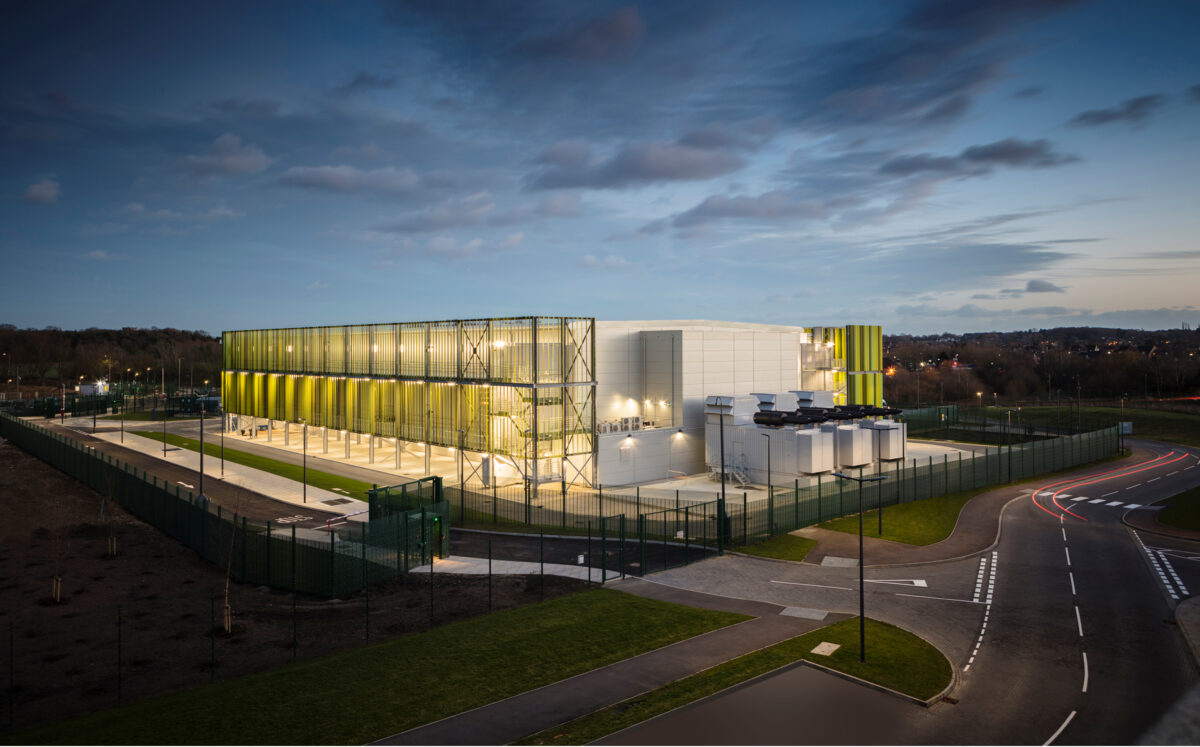
  • The demand for new data centre capacity is growing at an unprecedented pace, driven by the rise of artificial intelligence, cloud computing, and the ever-increasing need for real-time digital services. However, this rapid growth runs headlong

    Read also: The AI paradox: it consumes as much as Japan… and could save as much as Indonesia

    • Tags Carbon Emissions, Data Center Design, Data Centres, Digital Infrastructure, Energy Efficiency, Liquid Cooling, Sustainability
  • To mark the third anniversary of the REPowerEU Plan, the European Commission has published an assessment highlighting the key role of renewable energy in transforming the EU’s energy system.

    • Tags Energy Efficiency, Energy Transition, European Union, Renewable Energy, REPowerEU, Sustainability, Wind and Solar Power
TALAT
NextGen
Engineering Solutions
Camí Vell de Bunyola, 37, Local 9, North,
07009 Palma, Balearic Islands

+34 971 559031
info@talat.es
  • Legal Notice
  • Privacy Policy
  • Cookies
  • Ethics Channel
Whatsapp
Linkedin
Instagram